
Knowledge Base TTS 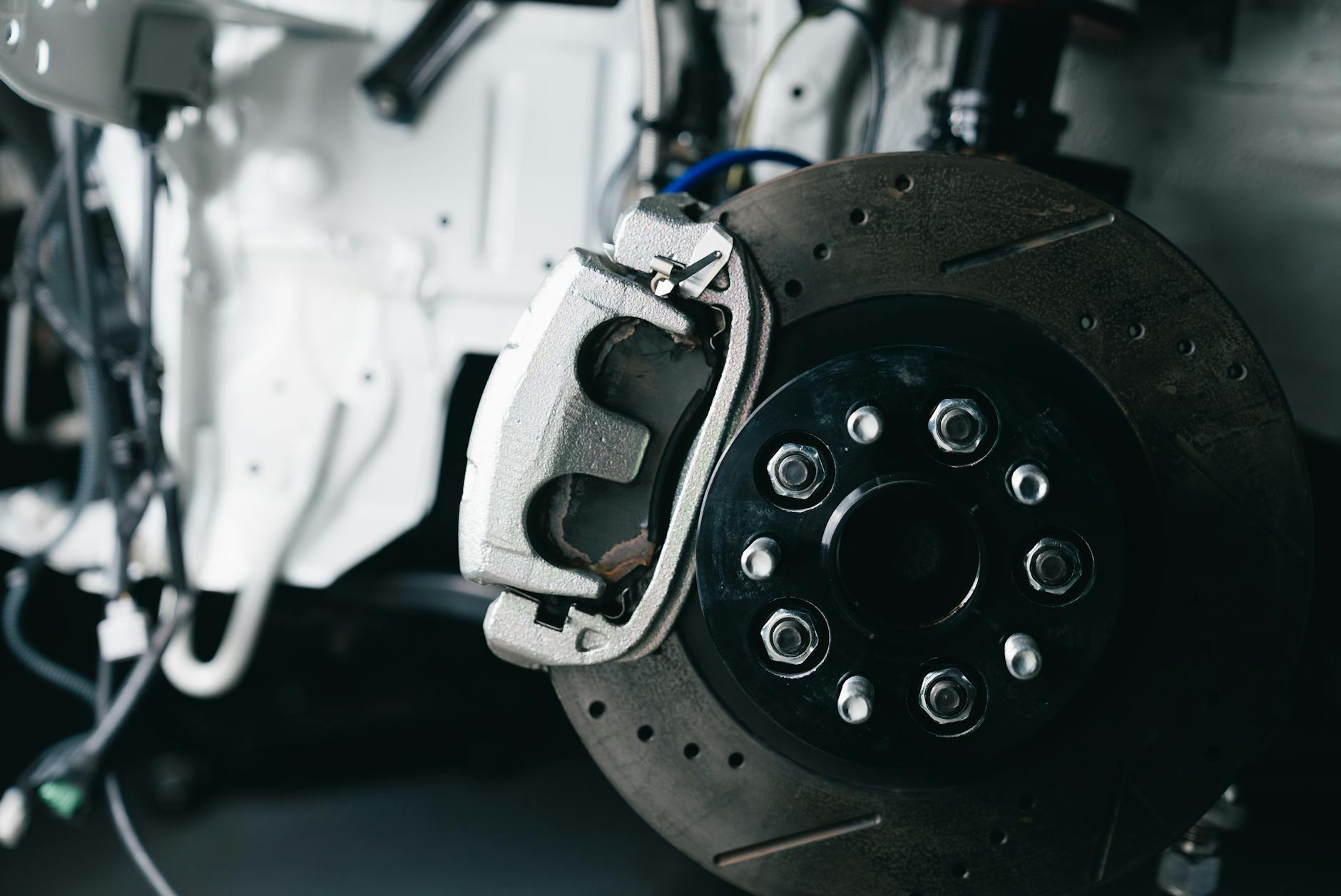
Brakes
2 min
Brakes: Your Safety
Brake disc wear, breaking in new pads and safety rules.
Brake Disc Wear
Every brake disc has the minimum allowable thickness (MIN THK) stamped on its edge. This value is specified by the manufacturer.
Example:
- New disc: 28 mm
- MIN thickness: 26 mm
- Allowable wear: 2 mm
Always check the marking on your disc!
IMPORTANT: Bedding-In New Brakes
First 200 km after replacement:
DO NOT brake aggressively!
Proper Bedding Procedure
- 0–50 km: Brake gently
- 50–100 km: Slightly increase intensity
- 100–200 km: Gradually increase load
Service Intervals
| Component | Front Axle | Rear Axle |
|---|---|---|
| Brake pads | 20–30k km | 40–60k km |
| Brake discs | 50–80k km | 80–120k km |
Why Is It Important?
What Happens If Wear Is Ignored:
| Component | Consequences |
|---|---|
| Worn pads (to metal) | Metal backing grinds the disc → deep grooves → disc replacement required. Cost: +300–800 PLN per disc |
| Disc below MIN thickness | Overheating → pedal vibration → cracks → RISK OF DISC FAILURE |
| Seized caliper guide pins | Pads do not retract → constant friction → overheating → premature wear |
| Stuck caliper piston | Uneven braking → vehicle pulling → one side wears 3–5x faster |
Why 200 km Bedding-In Is Critical
New pads and discs have microscopic surface irregularities. Aggressive braking can cause:
- Local overheating → uneven material transfer
- “Hot spots” on the disc → permanent vibration
- 20–30% shorter pad lifespan
Rule: Brake gently for the first 200 km – it doubles brake lifespan.
Tips
- Check the MIN marking on the disc
- Bed in new brakes for 200 km
- Never ignore squeaking or vibration
Need a consultation?
Need diagnostics or a price estimate? Contact us.