
Timing Chain and Belt: When to Replace?
Belt or chain - what's better? Replacement intervals and consequences of failure.
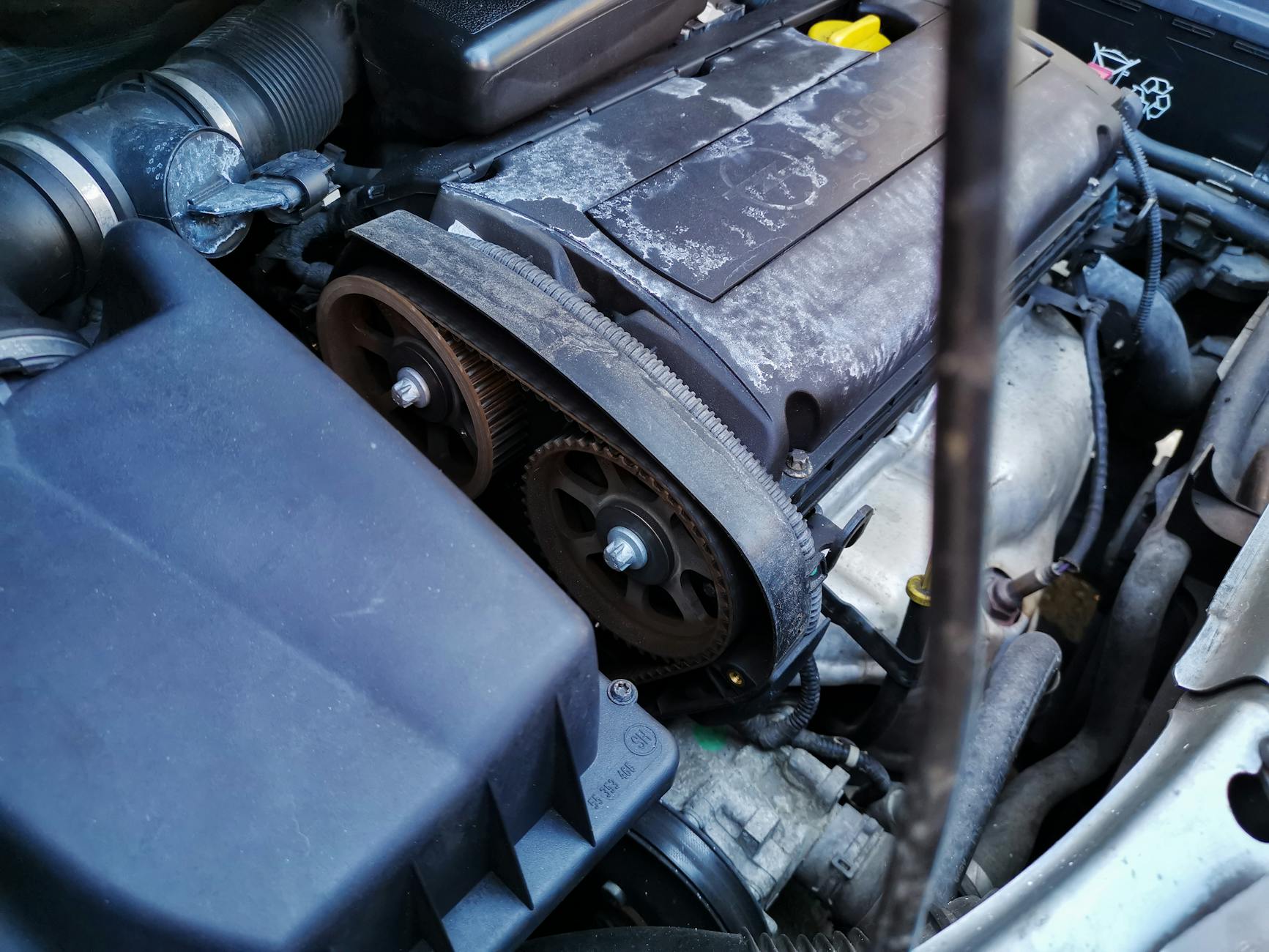
Timing System (Timing Belt / Chain)
The timing system synchronizes the crankshaft and camshaft. Its proper function is critical for the entire engine operation.
Timing Belt vs Timing Chain
Timing Belt
Advantages:
- Quieter operation
- Lower replacement cost
- No lubrication required
Disadvantages:
- Limited lifespan
- Can snap without warning
- Requires regular replacement
Timing Chain
Advantages:
- Longer lifespan
- Less frequent replacement
- Usually stretches gradually
Disadvantages:
- Noisier operation
- More expensive replacement
- Can stretch over time
Replacement Intervals
Timing Belt
| Manufacturer | Recommended Interval |
|---|---|
| Volkswagen/Audi | 60–90k km or 4–5 years |
| Ford | 80–100k km or 6 years |
| Toyota | 90–100k km |
| Renault/Nissan | 60–90k km or 5 years |
| Opel | 60–90k km or 5 years |
| Peugeot/Citroën | 60–80k km or 4–5 years |
Important: Always follow your vehicle manufacturer’s recommendations.
Timing Chain
| Engine Type | Expected Lifespan |
|---|---|
| Modern TSI/TFSI (VAG) | 80–120k km* |
| BMW N47/N57 | 100–150k km |
| Mercedes OM651 | 150–200k km |
| Toyota/Lexus | 200–250k km |
* Early 1.4 TSI and 1.8 TSI versions had issues as early as 50–80k km.
What Should Be Replaced with a Timing Belt?
Mandatory:
- Belt tensioner
- Idler rollers
- Water pump (if belt-driven)
- Shaft seals (if needed)
Recommended:
- Accessory belt
- Accessory belt rollers
Signs of Wear
Timing Belt
- Surface cracks
- Worn teeth
- Edge fraying
- Oil contamination
- Mileage exceeding interval
Timing Chain
- Rattling on cold start
- Noise from front of engine
- Timing errors (P0016, P0017, P0341)
- Rough engine operation
- Increased fuel consumption
Consequences of Timing Belt Failure
In Interference Engines
If the belt breaks:
- Crankshaft continues rotating
- Camshaft stops
- Pistons hit valves
- Result: bent valves, damaged pistons
Repair cost: 10,000 – 30,000 PLN or more
In Non-Interference Engines
The engine simply stops without major damage. These engines are rare.
Service at Twin Torque Service
Timing Belt Replacement
Labor cost: from 1200 PLN (parts not included)
Timing Chain Replacement
Front-mounted chain: from 1400 PLN (parts not included)
Rear-mounted chain (between engine and gearbox):
from 3500 PLN (parts not included)
Why Is It Important?
Timing Belt
| Problem | Technical Consequences |
|---|---|
| Rubber aging | Microcracks → sudden failure → catastrophic engine damage |
| Tooth wear | Belt slip → timing shift → power loss |
| Seized roller | Overheating → belt derailment → same effect as breakage |
Timing Chain
| Problem | Technical Consequences |
|---|---|
| Chain stretch | Timing shift → P0016/P0017 errors → power loss |
| Guide wear | Chain hits cover → noise → risk of jumping |
| Seized tensioner | Chain slack → tooth jump → valve-to-piston contact |
Compare: Belt + water pump replacement ≈ 2000–3500 PLN. Engine rebuild after failure ≈ 10000–30000 PLN.
Tips
- Replace timing belt every 60–90k km or 4–5 years
- Always replace water pump with the belt
- Listen to your engine — rattling may indicate a stretched chain
- Use high-quality components
Need a consultation?
Need diagnostics or a price estimate? Contact us.