
Symptoms of a Worn Turbocharger: When Regeneration Is Enough
A whistle, power loss, smoke from the exhaust and a rising oil level are classic signs of a worn turbo. We explain the causes and when regeneration makes more sense than a new turbocharger.
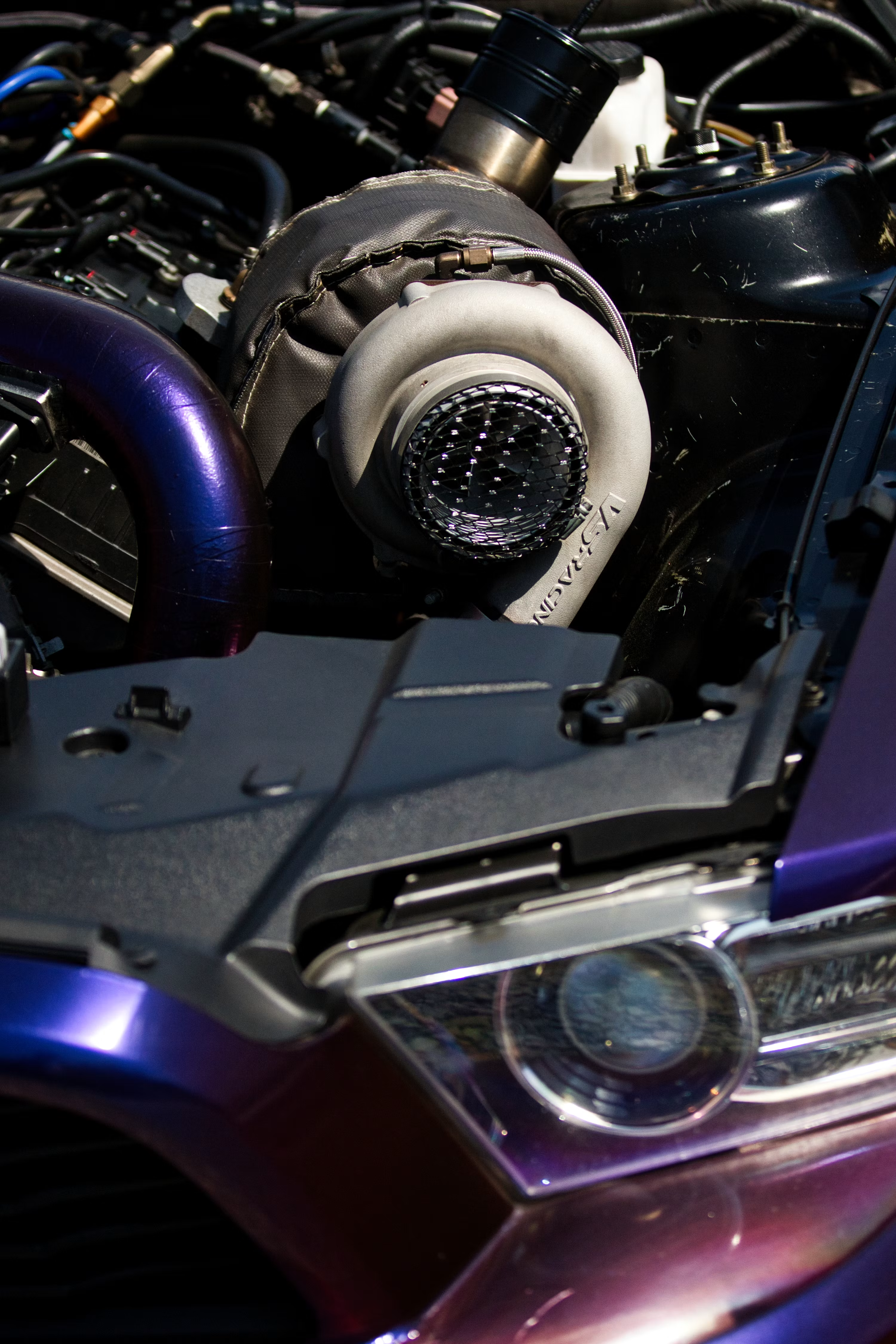
How a turbocharger works
A turbo uses the energy in the exhaust gases to drive a compressor that forces more air into the engine. The rotor spins at up to 150,000–250,000 rpm and is lubricated by engine oil. That's why the quality and cleanliness of the oil are so critical for a turbocharger. Neglected oil kills it far more often than mileage alone.
The most common symptoms of a worn turbo
- Power loss and weaker acceleration, sometimes a switch to limp mode.
- A whistle or squeal that grows with the revs, a sign of worn bearings or a leak in the boost system.
- Blue smoke from the exhaust: the turbo is letting oil past worn shaft seals into the intake.
- Black smoke: too much fuel for too little air, often caused by stuck variable geometry.
- Rising oil consumption with no visible leaks under the car.
- Metallic, rattling noises: at this point the rotor is contacting the housing, which is serious damage.
- A noticeably slower throttle response than usual.
Even a hint of smoke or a whistle is a sign not to wait. Driving with a damaged turbo can lead to oil being drawn in and the engine running away.
Where the wear comes from
Oil starvation and dirty oil
The most common cause of failure. Blocked oil channels, infrequent oil changes or too low a level leave the bearings running almost dry. The turbo then dies sooner than its mileage would suggest.
Coked-up geometry
In diesels with variable geometry (VNT/VGT), the moving vanes seize up with soot. The symptoms are power loss, limp mode and black smoke. In many cases cleaning and regeneration are enough, without replacing the whole turbo.
Foreign-object damage
A snapped-off fragment, debris from an earlier engine failure or ingested dirt can chip the rotor and destroy the entire assembly in an instant.
Normal wear and tear
Seals and bearings have a finite life, usually 150,000–250,000 km, heavily dependent on oil care and driving style.
How to tell a bad turbo from other faults
Power loss and limp mode don't always mean a worn turbo. A clogged DPF, a chafed boost hose, a blocked air filter, a faulty boost pressure sensor (MAP) or tired injectors all show very similar symptoms. So before anyone suggests replacing the turbocharger, it's worth checking the simpler, cheaper things.
Here's how we do it at the garage:
- we read the fault codes and the actual boost pressure while driving,
- we check the intake system, hoses and intercooler for leaks,
- we assess rotor play (axial and radial) and the condition of the vanes,
- we check whether oil is getting through the inlet.
Only a full set of data like this lets us pin the blame on the turbo for certain, rather than replacing it "blind".
Regeneration or a new turbo
In many cases regeneration restores full performance for a fraction of the price of a new part. During regeneration we:
- strip the turbo down and clean it thoroughly,
- replace the core, i.e. the bearings, seals and the shaft with the rotor,
- clean or replace the geometry,
- dynamically balance the rotor to eliminate vibration.
Regeneration makes sense when the housing and geometry aren't permanently damaged. With a cracked housing or ruined geometry, a new or factory-regenerated turbo is often the better choice.
| Option | Approximate cost |
|---|---|
| Diagnostics (read-out, play, boost pressure) | from 100 PLN |
| Turbocharger regeneration | 900–2000 PLN |
| New turbo (aftermarket) | 2500–5000 PLN |
| New turbo (OEM) | 4000–8000 PLN and up |
After the repair, don't repeat old mistakes
If we don't fix the cause, a new or regenerated turbo will fail again, often within a few thousand kilometres. That's why, when we replace it, we:
- flush or replace the turbo's oil lines,
- fit fresh oil and a new filter,
- check the crankcase ventilation and the intake for leaks.
When to come in straight away
Some symptoms mean that carrying on driving risks an expensive failure. Stop and call a garage if you notice:
- thick blue smoke from the exhaust, especially when you accelerate,
- a clear oil leak around the turbo or a rapidly dropping oil level,
- a metallic, grinding noise from the engine bay,
- a sudden surge in revs that you can't bring under control with the throttle.
That last symptom is a sign that the engine may be starting to draw in its own oil. In that situation, the safest thing is to switch the engine off and wait for help rather than risk a runaway.
How to extend your turbo's life
- Use good oil and change it every 7,000–10,000 km.
- After hard driving, let the engine idle for a moment so the turbo can cool down.
- Don't load a cold engine heavily before the oil has warmed up.
- React to the first whistle or wisp of smoke instead of waiting for a major failure.
Twin Torque Service in Targówek
At our garage in Warsaw at ul. Chodecka 1D, we start with diagnostics that let us tell a worn turbo apart from a problem with the geometry, a sensor or the intake. If the turbocharger can be regenerated, we suggest that instead of a costlier replacement, and we always remove the cause of the failure so the repair lasts.
Need a consultation?
Need diagnostics or a price estimate? Contact us.